10 High-Touch Areas Businesses Often Forget to Clean
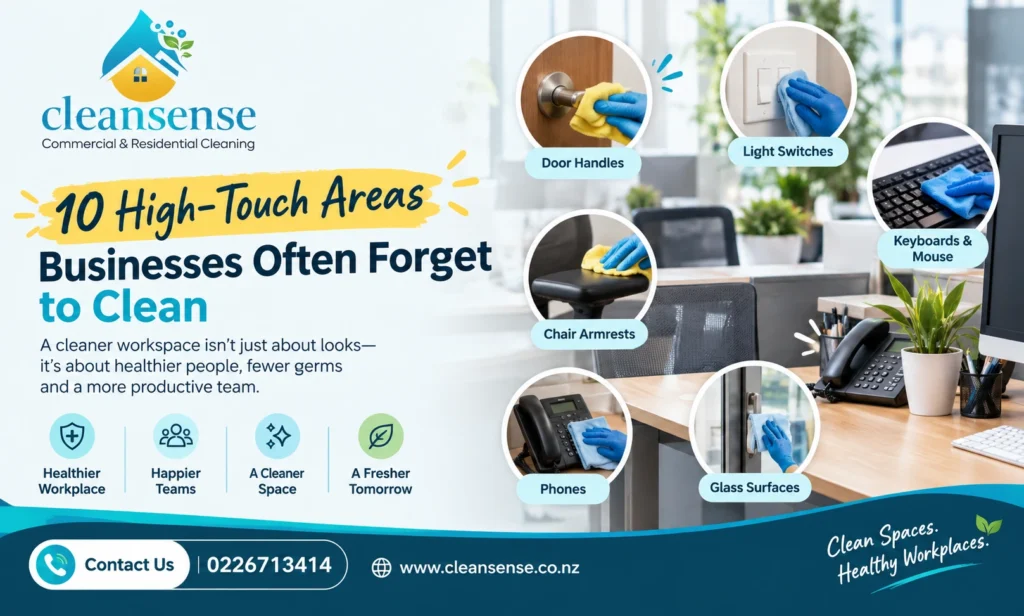
High-touch spots in a workplace are the places people touch with their hands again and again. Think of door knobs, light switches, shared machines, and any tools used by more than one person each day. Since these items get handled so much, germs can build up much faster there than on open floor areas or on some pieces of furniture. Still, regular General cleaning plans often leave these spots out. Schedules may focus on floors, desks, and bathrooms instead. For businesses in Auckland, this matters in a practical way. It can mean the difference between a place that only looks tidy and a place that is truly kept clean. Offices, shops, schools, kindergartens, and job sites all face the same problem. Below are ten high-touch areas that are commonly overlooked, plus why they matter and what you can do to keep them in check. Why High-Touch Cleaning Matters More Than Ever Workplace hygiene studies keep showing the same pattern: germs spread quickly after they land on shared items. A University of Arizona report that gets cited a lot found that about half of the usual “high touch” spots in an office picked up a virus by mid day. This happened after only one ill worker came in. Other checks point to how messy desks can get. A typical desk can hold about 20,000 germs in every square inch. That is close to 400 times more than what people find on a toilet seat. The worst offenders often include elevator button panels, coffee machine handles, fridge door pulls, kitchen taps, restroom door handles, computer keyboards, phones, and printer controls. For businesses in Auckland, these findings matter in day to day terms. When people take sick days, work slows down. Places clients see can also shape how a business is viewed. In settings like childcare and schools, where rules apply, hygiene cannot be treated as optional. If a cleaning schedule only targets low use areas, it can leave out the surfaces that spread trouble fastest. The 10 High-Touch Areas Most Businesses Miss 1. Door Handles, Push Plates and Handrails Every person entering or leaving a room touches the same handle, often without washing their hands first or after. Front entrances, meeting room doors, and fire exits are used dozens or hundreds of times a day, yet handles are frequently wiped only during a general dust-down rather than disinfected. A daily wipe-down with a proper disinfectant, not just a dry cloth, should be standard for any commercial cleaning services Auckland business relies on. 2. Light Switches and Switch Plates Light switches get handled a lot. You see them the moment you walk in, so almost everyone touches them. Still, many people forget to wipe them. They are small, and they are often not in your direct view when you clean. Some research reports that switches can have less buildup than desks or phones. The idea is that you only press them for a moment. But “less contaminated” does not mean “clean.” They should still be included in any cleaning checklist. 3. Elevator and Vending Machine Buttons In multi-storey office buildings, elevator buttons are pressed by every visitor and staff member, often with the same finger used moments later to eat a snack or rub an eye. Vending machine buttons and touchscreens carry the same risk. These small, plastic surfaces are easy to disinfect but easy to forget precisely because they’re not part of a “surface” in the traditional sense. 4. Reception Desks, Countertops and Sign-in Tablets Reception areas are a business’s first impression, but they’re also a hygiene bottleneck: visitors lean on the counter, sign in on shared tablets or pens, and staff handle deliveries, mail, and packages across the same surface all day. A visibly clean but rarely disinfected reception desk undermines the professional image a business is trying to project. 5. Staff Kitchen Appliances Including Ovens and Microwaves Break rooms and staff kitchens are used by everyone in the building. People touch fridge doors, microwave buttons, and kettle handles all day, often without washing their hands first. Ovens need extra care. Grease and bits of food can stick inside the oven cavity. They also collect along door seals and near the control panel. A fast wipe usually does not reach these spots. That is why professional oven cleaning Auckland matters. Baked-on grease is not just dirty. It can raise the chance of a fire. It can also cause smoke and bad smells that do not go away with a quick clean. Cleansense offers deep appliance cleaning as part of its commercial and home cleaning services in Auckland. Ovens are treated the same way as floors and bench surfaces. 6. Bathroom Taps, Flush Buttons and Dispensers Bathrooms usually get cleaned regularly, but the specific touch points inside them tap handles, flush buttons, soap and paper towel dispensers, and door locks need separate, frequent disinfection rather than a single end-of-day wipe. These are also the surfaces most likely to be touched immediately before or after hand contact with the face. 7. Shared Office Equipment: Keyboards, Phones, Printers Hot-desking lets more than one person use the same work setup in the same day. That can include the keyboard, mouse, phone handset, and the screen on a printer or photocopier. A Clorox funded study looked at office germs. It listed phones first, then desks, then keyboards, and then computer mice. If a company uses shared or flexible seating, it should make cleaning a top priority. This should not be something they do only later or after other tasks are done. 8. Stairwell and Corridor Handrails Handrails are gripped tightly, often by several people in quick succession, and rarely feature on standard cleaning checklists because they’re considered part of “the building” rather than a workspace. In multi-level offices, retail centres, and schools, they should be treated the same as door handles. 9. Hard Floors Near Entrances and High-Traffic Zones Floors do not count as the first “touch” in a strict sense. Still, entrance mats, threshold